
There are moments in life when the mind feels loud, the nervous system feels overloaded, and even small tasks begin to feel heavy.
For many women in midlife, that feeling becomes familiar.
The constant mental loops. The pressure to keep pushing through. The emotional weight no one else can see. The exhaustion that does not fully disappear with sleep.
Over the past several months, I have been exploring a gentle practice called EFT Tapping, also known as Emotional Freedom Techniques.
At first glance, tapping can seem unusual. It combines light tapping on acupressure points with intentional awareness and calming phrases.
But once you experience it, something begins to shift.
The body softens. The breath deepens. The nervous system often feels safer and steadier.
For many people, tapping becomes a simple tool that helps interrupt stress patterns and create space for clarity, emotional balance and calm.
Today, I want to share what EFT tapping actually is, where it came from, what the science says, and why I believe it can become a valuable support practice for women navigating stress, overwhelm and emotional exhaustion.
What Is EFT Tapping?
EFT stands for Emotional Freedom Techniques.
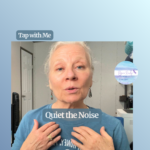
It is often called “tapping” because the practice involves gently tapping with the fingertips on specific acupressure points on the face and upper body while focusing on thoughts, emotions, physical sensations or stressful experiences.
The most common tapping points include:
- Side of the hand (Karate Chop point)
- Inner eyebrow
- Side of the eye
- Under the eye
- Under the nose
- Chin point
- Collarbone
- Under the arm
- Top of the head
During tapping, people often acknowledge what they are feeling while also introducing calming, grounding or supportive statements.
Rather than avoiding stress or forcing positivity, tapping encourages awareness without overwhelm.
That is one of the things I appreciate most about it.
It allows people to meet themselves honestly while gently supporting the nervous system at the same time.
A Brief History of EFT Tapping
EFT tapping was developed in the 1990s by Gary Craig, who studied under psychologist Dr. Roger Callahan.
Dr. Callahan originally created a method called Thought Field Therapy (TFT), which combined elements of psychology with tapping on acupressure points used in traditional Chinese medicine.
Gary Craig later simplified the process into what became Emotional Freedom Techniques, making it easier for everyday people to learn and use.
Over time, EFT expanded beyond personal development spaces and began attracting attention from researchers, therapists, healthcare professionals and wellness practitioners interested in stress reduction and emotional regulation.
Today, EFT is used around the world by individuals, coaches, counselors, healthcare practitioners, veterans, educators and wellness professionals.
How EFT Tapping May Support the Nervous System
When we experience stress, the nervous system often shifts into survival patterns.
Some people become anxious and restless. Others shut down or feel emotionally numb. Others continue functioning outwardly while internally feeling overwhelmed and exhausted.
Many women become so accustomed to living in stress mode that it begins to feel normal.
Tapping may help interrupt those patterns.
Researchers believe EFT may help calm the amygdala, the part of the brain involved in stress and fear responses, while also supporting emotional processing and nervous system regulation.
Many people report feeling:
- calmer
- clearer
- emotionally lighter
- less reactive
- more grounded
- more connected to themselves
- more able to pause before reacting
I often describe it as creating a small moment of space.
And sometimes, that space changes everything.
What Does the Research Say About EFT?
While EFT is still considered complementary and more research continues to emerge, multiple studies have explored its potential effects on stress, anxiety, emotional well-being and even cortisol levels.
Research has shown promising results related to:
- stress reduction
- anxiety support
- emotional regulation
- PTSD symptom reduction
- lowering cortisol (stress hormone) levels
- improved emotional resilience
- improved sleep
One frequently referenced study published in the Journal of Nervous and Mental Disease found significant reductions in cortisol levels after EFT sessions compared to other interventions.
Additional studies have explored EFT in clinical settings, veterans programs, healthcare environments and wellness practices.
While EFT is not presented as a cure-all, growing research suggests it may be a valuable supportive tool for emotional well-being and nervous system care.
What EFT Tapping Is Not
Because tapping has become more popular online, there are many different ways people talk about it.
Some approaches focus heavily on manifestation or dramatic transformation.
That is not how I personally approach this work.
For me, tapping is not about pretending everything is fine. It is not about bypassing emotions. It is not about forcing positivity. And it is not about “fixing” yourself.
Instead, I view tapping as a gentle nervous system support practice.
A way to:
- pause
- breathe
- notice what is happening internally
- reduce overwhelm
- create emotional steadiness
- reconnect with yourself
Sometimes healing begins with something very small.
A slower breath. A softer jaw. A little more clarity. A little less internal pressure.
Those moments matter.
A Personal Moment That Reinforced This Work
A few days after class recently, one of my clients came up to me and shared something that genuinely surprised me.
She said she could feel my energy during class and had left feeling even more grounded, centered and peaceful than usual.
When I asked her why she thought that was the case, she said she had been physically closer to me during class and experienced fewer distractions from other students around her.
That conversation stayed with me.
Not because I believe teachers need to be perfect or endlessly calm.
But because it reminded me how deeply our nervous systems affect one another.
When we become more grounded ourselves, we often create safer spaces for others too.
That is one of the reasons practices like breathwork, Yoga Nidra, gentle movement and EFT tapping feel so meaningful to me.
They support us internally first.
And from there, that steadiness often ripples outward.
My Own Experience with Overwhelm
As an entrepreneur, there is a never-ending cycle of tasks.
Marketing alone can easily become overwhelming.
Wednesdays are usually the day I block out for business and marketing work. Recently, I found myself debating whether I should spend the day working or attend a women’s herbal class.
Immediately, I felt the familiar sinking feeling. The anxiousness. The pressure. The internal voice saying I should stay home and be productive.
At the same time, I knew how valuable it would be to spend time with like-minded women, learn something new and focus on something completely unrelated to business.
So I paused.
I focused on my breath. I grounded myself. I allowed myself to step out of stress mode long enough to think clearly.
And from that calmer place, the answer became obvious.
I peacefully chose to attend the class.
And interestingly enough, I still completed most of the marketing work I needed to do.
That moment reminded me of something important.
We often make better decisions when our nervous system feels supported.
Not rushed. Not pressured. Not trapped in overwhelm.
Supported.
Why EFT Tapping May Be Especially Helpful in Midlife
Midlife often brings enormous transitions.
Hormonal changes. Caregiving. Career stress. Aging parents. Changing identities. Grief. Sleep disruption. Emotional exhaustion. The realization that pushing harder no longer works the way it once did.
Many women begin searching for approaches that feel gentler, more sustainable and more supportive of the whole person.
That is where EFT tapping may offer something meaningful.
It is accessible. It does not require perfection. It can be practiced in a few minutes. It encourages awareness instead of suppression.
And perhaps most importantly, it reminds us to pause long enough to listen to ourselves.
Simple Ways to Begin EFT Tapping
If you are curious about tapping, start simple.
You do not need to do it perfectly.
You might begin by:
- noticing where stress shows up in your body
- gently tapping while breathing slowly
- naming what you are feeling
- offering yourself supportive phrases
- practicing before bed
- using tapping during moments of overwhelm
- pairing tapping with mindfulness or journaling
Even a few minutes may help create more awareness and steadiness.
A Gentle Reminder
EFT tapping is considered a complementary wellness practice and is not intended to replace medical care, mental health treatment or professional support.
If you are experiencing significant emotional distress, trauma, anxiety, depression or medical concerns, please seek guidance from a qualified healthcare or mental health professional.
Tapping can be one supportive tool within a larger framework of care.
Final Thoughts
I think many women are not actually looking for another complicated wellness routine.
I think they are looking for ways to feel calmer in their own minds. Safer in their own bodies. More connected to themselves again.
Sometimes that begins with something surprisingly simple.
A breath. A pause. A few gentle taps.
If you are curious about EFT tapping and nervous system support practices, I would love to have you join me.
Inside Calm Confident Woman Studio, we explore gentle yoga, mindfulness, Yoga Nidra, breathwork and supportive practices designed to help women feel calmer, steadier and more at home in themselves.
And if you are longing for a deeper reset, The Exhale Retreat offers space to pause, breathe and reconnect in community with other women.
You are always welcome.
Curious about nervous system support
 practices like EFT tapping, gentle yoga and Yoga Nidra?
Join me for live online classes designed specifically for midlife women seeking calm, steadiness and support.
Explore classes and upcoming experiences at yoga.reginarowley.com
Stress and overwhelm often become so normalized that many people stop noticing how much tension they are carrying each day.
That is one reason I have become increasingly interested in practices like EFT Tapping, mindfulness and nervous system regulation.
If you’re familiar with EFT, I’d love to hear about your experience. And if you’re completely new to it, feel free to share any questions below.
with loving-kindness,
~ Regina